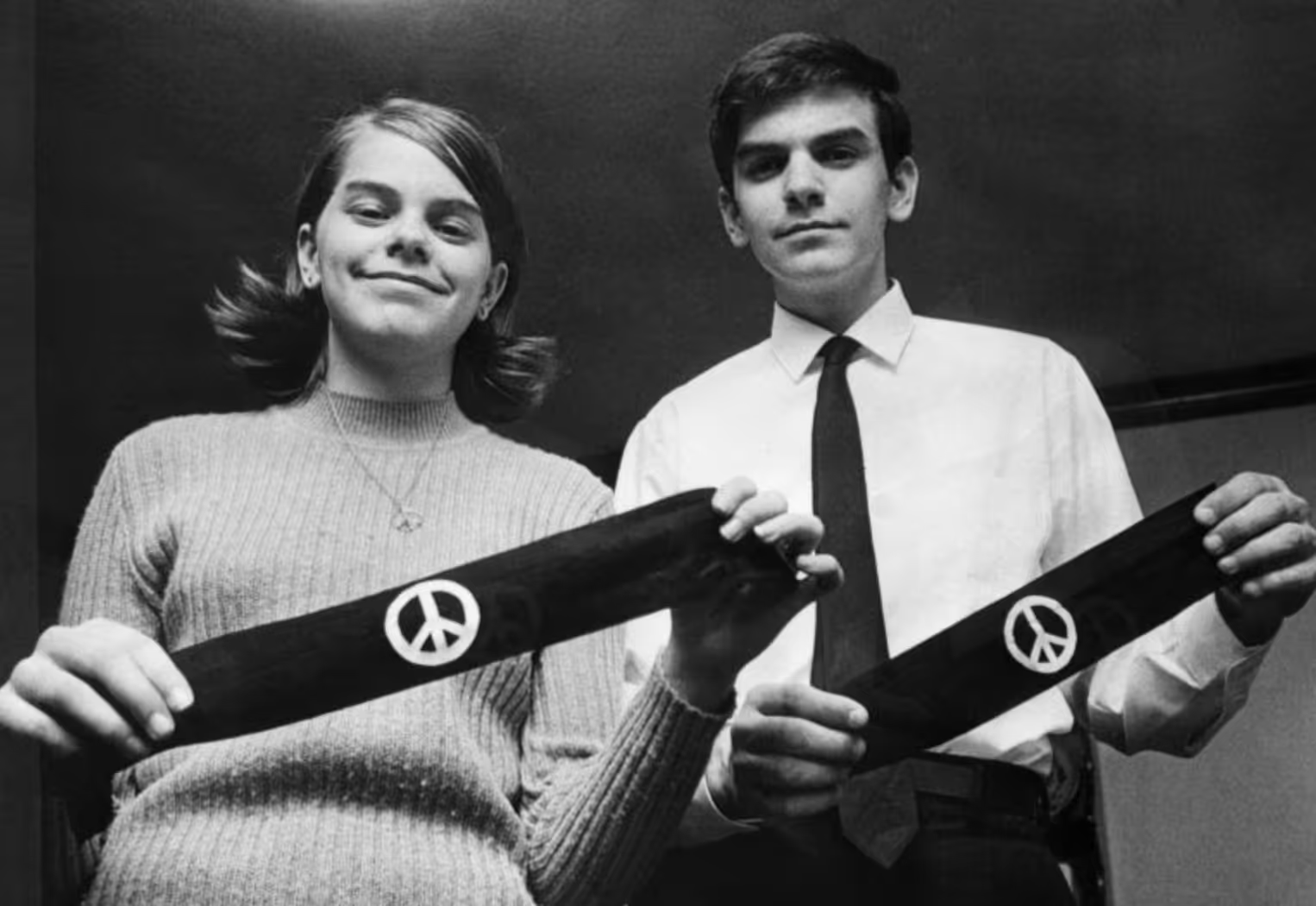

In this article, we’ll discuss the history of fashion in boycotts and activism, as well as how these events relate to our current political climate. Fashion remains an important part of how we interact with the world, and how we can create change in it.
Successful Fashion Boycotts and Movements
1. 2013 Rana Plaza Collapse
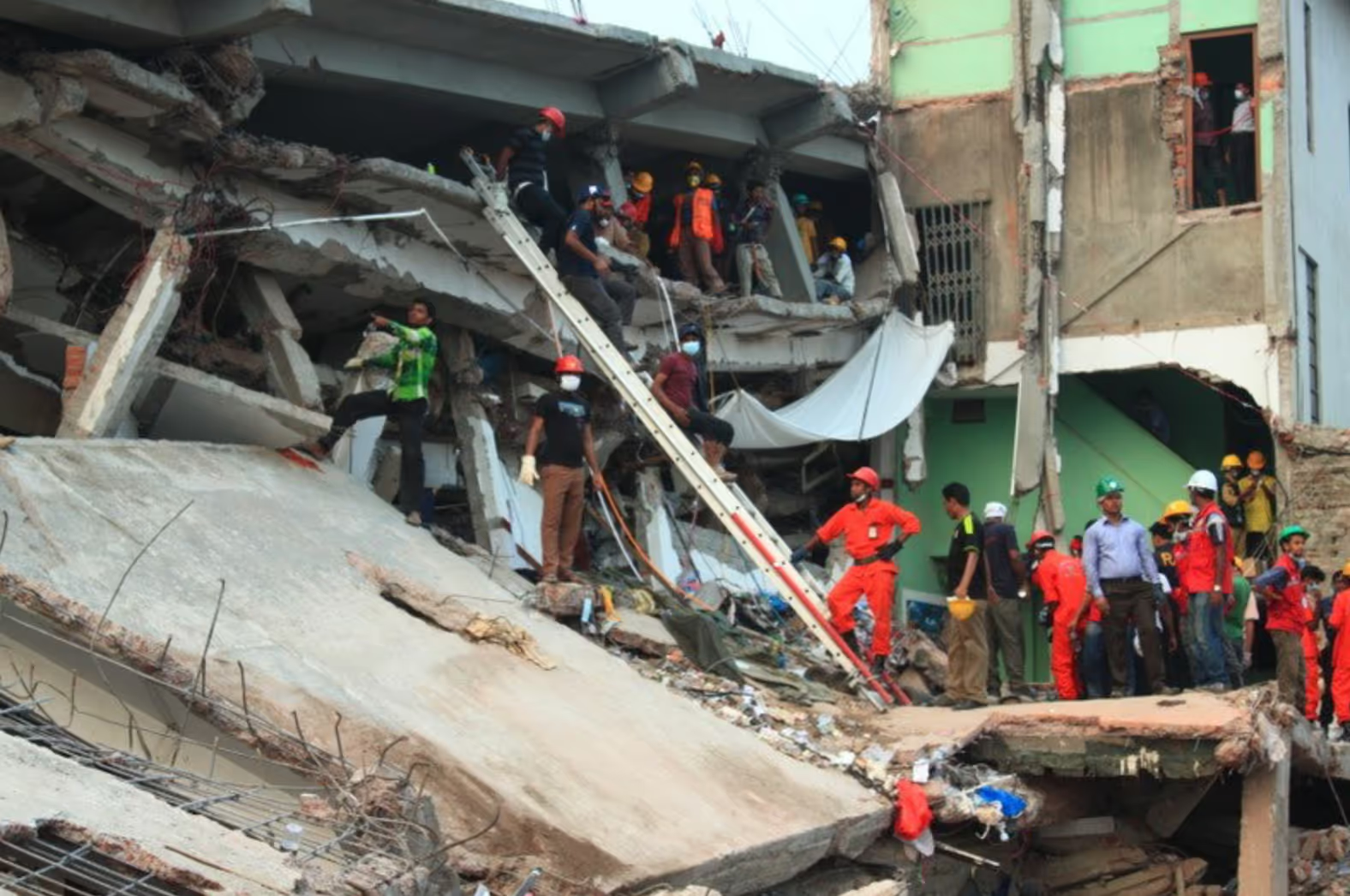
Rana Plaza was an eight-story commercial building in Savar, Bangladesh. It housed shops, a bank, and, most famously, garment factories. On April 24th, 2023, the Plaza collapsed, killing 1,134 people and leaving thousands more injured. One of the more notable aspects of this event is that the number of casualties could have been greatly lessened if not for the neglect of the building owners and management.
Not only had the upper four floors been built without a permit, but the building was designed to hold shops and offices, not heavy machinery. A day before the collapse, a TV channel reported and showed distinct cracks in the building’s infrastructure. The building was evacuated and the shops and bank were closed, but Sohel Rana, the building owner, told the media that the building was “safe” and that workers must return the following day. The company Ether Tex even threatened to withhold a month’s pay from workers who refused to return.
The Accord on Fire and Building Safety, or the Bangladesh Accord, signed on May 15th, 2013, the Accord is a g. Notable signers are American Eagle, Fruit of the Loom Inc., and Fanatics. Since 2021, it has transitioned to the International Accord, but the original principles remain the same.
While this issue might seem far-off for readers in the United States, it’s closer to home than you might think. Many American companies outsource their labor, and a few of them used the factories in Rana Plaza to manufacture their garments. They included: Cato Fashions, The Children’s Place, Iconix, J.C. Penny, and Walmart. It’s estimated that these companies barely donated any money to the victims' families.
2. China and Xinjiang Cotton

In the past decade or so, it’s come to light that alongside a vast network of detention camps, in which more than a million are thought to be detained, over 500,000 of Chinese minority Uyghur Muslims are being coerced to work in factories. Although the Chinese government denies this, references to “illegal religious activities” in the policies indicate that these camps are targeting religious minorities—especially the Uyghur population who live in Xinjiang. The detention camps were built in 2016 to “re-educate” Uyghury muslims. For comparison, the sentiment is similar to that of the boarding schools created in attempts to forcibly assimilate Native Americans here in North America. Notably, the parallel purpose of mass employment and mass internment is made clear by the appearance of many factories within the walls of the camps, or in close proximity to them. After minorities are mass-transported into the fields, they are seen from satellite video wearing factory uniforms.
Better Cotton Initiative, an independent industry body that promotes ethical and sustainable standards, told the BBC that concerns over China’s poverty alleviation scheme were one of the main reasons they’ve recently decided to stop auditing and certifying farms in Xinjiang. Many major brands have expressed concern about forced labor, and due to both that and Western countries imposing sanctions on China, stores are disappearing. After expressing concern, H&M and Nike have had their locations closed and websites blocked, along with Burberry, Adidas, Converse, and others.
85% of China’s cotton and 20% of the world’s cotton comes from Xinjiang. Chinese national brands publicly defend Xinjiang cotton, and well-known Japanese brand Asics even pledged support. The opposite is happening in the United States, with well-known brands no longer getting their cotton from the region.
3. Boycotts on the Individual Level
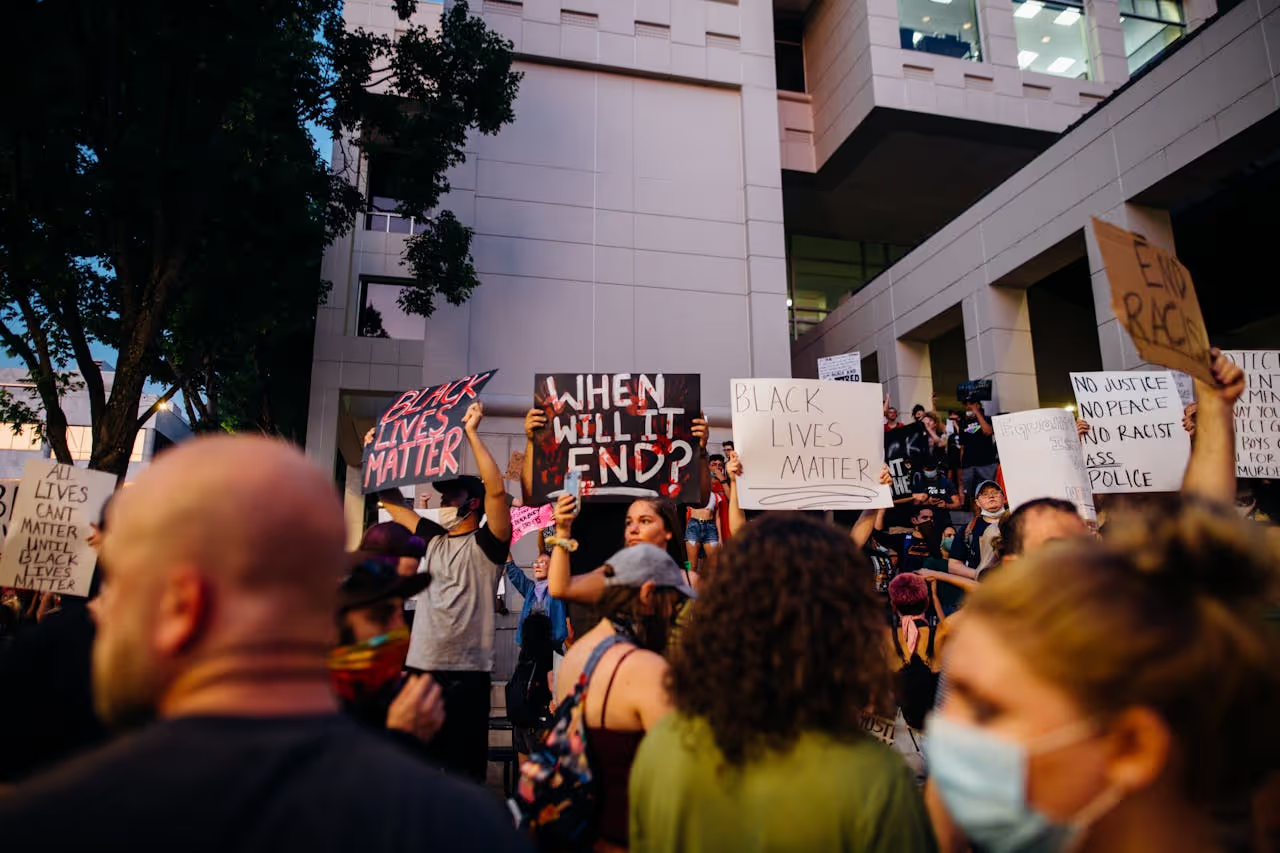
On the individual level, people have refused to buy from brands based on differing moral values. In the past five years, there have been two types of boycotts that surged above all others. Firstly, the avoidance of brands that are racist or anti-BLM (Black Lives Matter). Secondly, the avoidance of brands and distributors that directly or indirectly support Israel or other Zionist organizations.
One significant boycott was against DollsKill, a fast fashion brand, in 2020. 2020 was a big year for the Black Lives Matter Movement. After George Floyd was murdered by police officers in Minnesota, people all across the United States took to the streets to protest the inhumane treatment of Black Americans. Like many businesses, DollsKill shuttered its storefront in fear of looting during the protests (which, notably, did not happen at the hands of protestors themselves, but rather by unaffiliated people taking advantage of the situation). Unlike other businesses, however, the owner, Shoddy Lynn, posted a picture of police in front of their storefront with the caption “Direct Action in its glory” with the hashtag #blm.
The company already had a history of racist controversies, including selling a shirt that read “goth is white,” and indigenous American headdresses. The famous RnB and pop musician, SZA, led the internet outrage against the brand on Twitter. Along with the movement against fast fashion companies for their questionable labor practices and poor-quality clothing, the boycott against DollsKill significantly changed the directory of the brand. The owner has since apologized and has taken the Instagram post down, but many consumers still avoid purchasing from the brand even five years later.
More recently, consumers have been boycotting Zionist brands. For example, in 2025, Reebok signed a sponsorship contract with the Israel Football Association (IFA), which plays at settlement clubs on illegally occupied Palestinian land. In fact, PUMA was a sponsor of the IFA as well until 2024, when boycotts and pushback from the general public motivated them to leave the contract.
Fashion as Activism
Fashion has been used as protest all over the world, and all throughout history. Here are some significant examples from American history and in the world right now.
1. Vietnam Anti-War Armbands
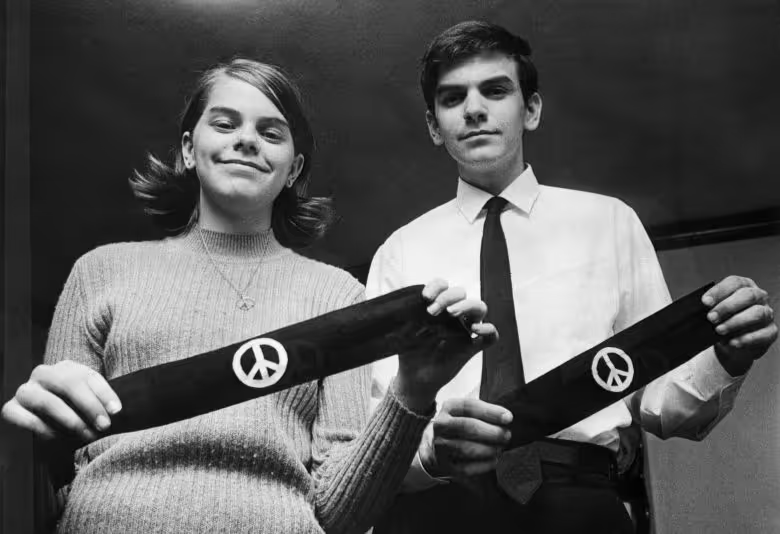
To protest the Vietnam War, a group of students from Des Moines, Iowa planned to wear black armbands to school. Mary Beth Tinker was wearing one when she was suspended, prompting her family to file a lawsuit against the school board. The Tinker vs. Des Moines case escalated all the way to the Supreme Court, and was significant because it was a landmark case in terms of cementing the First Amendment as a form of protection for fashion as protest, at least in public institutions. Thanks to this case, students no longer had to be afraid of repercussions for expressing themselves, even in a political or “unpatriotic” context.
2. The Black Panther Party
.avif)
The Black Panther Party was a political organization that came to prominence in the 1960s in Oakland, California, during the Civil Rights Moments. It was originally created to patrol African American neighborhoods to protect residents from police brutality, but became so much more than that. Later, they became a Marxist revolutionary group that called for the arming of African Americans, the exemption of African Americans from the military draft, the release of African Americans from jail, and reparations.
The group has a controversial reputation by many white Americans for being violent, but in reality, their humanitarian efforts are what set them apart from other political groups of the time. They “launched more than 35 survival programs to help local communities. These included but were not limited to funding public education, tuberculosis testing, legal aid, transportation assistance, ambulance service, manufacturing and distributing shoes to the poor.” One of the more famous efforts they undertook was the Free Breakfast for Children Program.
In line with their unique views and groundbreaking initiatives, members of the Black Panther Party dressed in a “uniform” to distinguish themselves. They often wore their hair in an afro which was tucked into a black beret. They wore black sunglasses, black leather jackets adorned with buttons, a gun strapped along the body. They stood with their first in the air, which remains a symbol of Black power to this day. The uniform is significant because it stood out against other activists wore during the Civil Rights Movement, which focused on conformity and professionalism.
Activists wore business casual or their “Sunday Best,” which reflected their desire to be respected by the masses. On the other hand, Black Panthers challenged white standards and didn’t conform to respectability politics. The uniform was also unisex, which allowed women to participate as well.
Each part of the uniform had its own meaning. The berets were inspired by French resistance during WWII, the sunglasses were a commentary about consistent government surveillance, the buttons promoted their views in an accessible way, and their afros symbolized how Blackness is beautiful and doesn't need to be changed to survive.
3. The Keffiyah
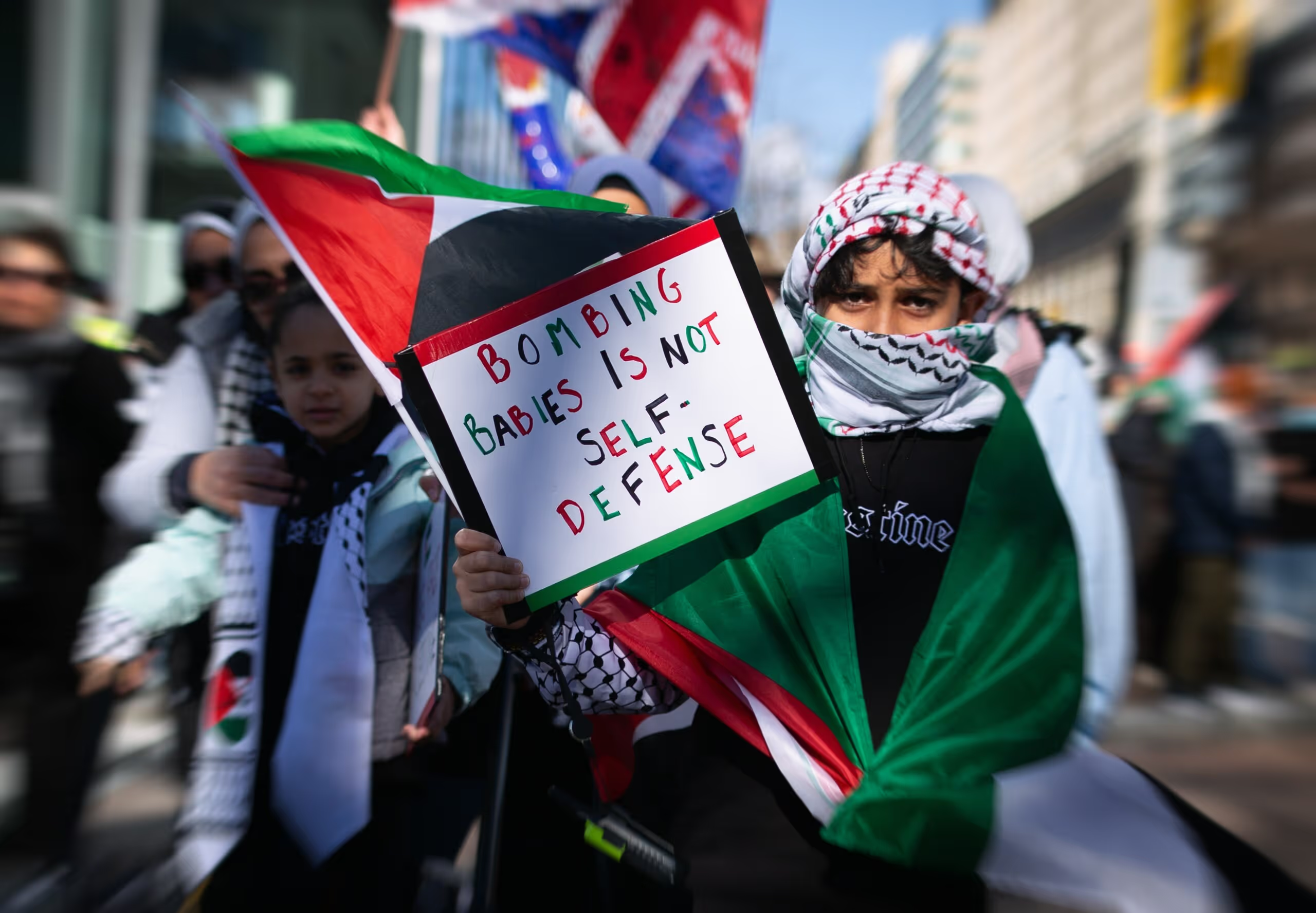
Walking along a quad in college or a busy street in a city in the United States, you’re bound to see a keffiyah or two. Keffiyahs are traditional Arab headdresses, also called hattas. It was worn by nomadic communities across Palestine for centuries, and comes in multiple colors, although the black and white version has seen the most popularity recently. The black stripes are said to represent the historical trade routes, the fishnets to represent the ties to the Mediterranean Sea, and the curvy lines represent olive trees, a major source of Palestinian pride. In the past couple of years, they have become synonymous with support for a free Palestine, or at the very least, a ceasefire, but they’ve been used as a symbol of resistance since the Arab Revolt in Palestine in 1936, when they were used to disguise the faces of revolutionaries. In the 1960s, it was worn by women as well, largely thanks to the revolutionary Leila Khaled. Now, it is not only worn by Palestinians, but those to show their solidarity to Palestinians as well. The simple garment shows the history of the country, and the persistence of a culture that refuses to be wiped out.
What Boycotts and Activism Tell Us About Fashion as Politics
Although it’s easy to tell ourselves that we have such minimal impact on the political state of the world, we have more power than we give ourselves credit for. As consumers, we can choose to buy from brands whose morals we support, as well as inform those around us about injustices in the fashion industry. We don’t need to wait for a news article to come out about less-than-ideal business practices by companies we support—we can research that ourselves. Furthermore, we can use self-expression to show our values and make a difference in our local communities. Embrace your individuality, celebrate your First Amendment rights, and show solidarity to places you care about.
.jpeg)