
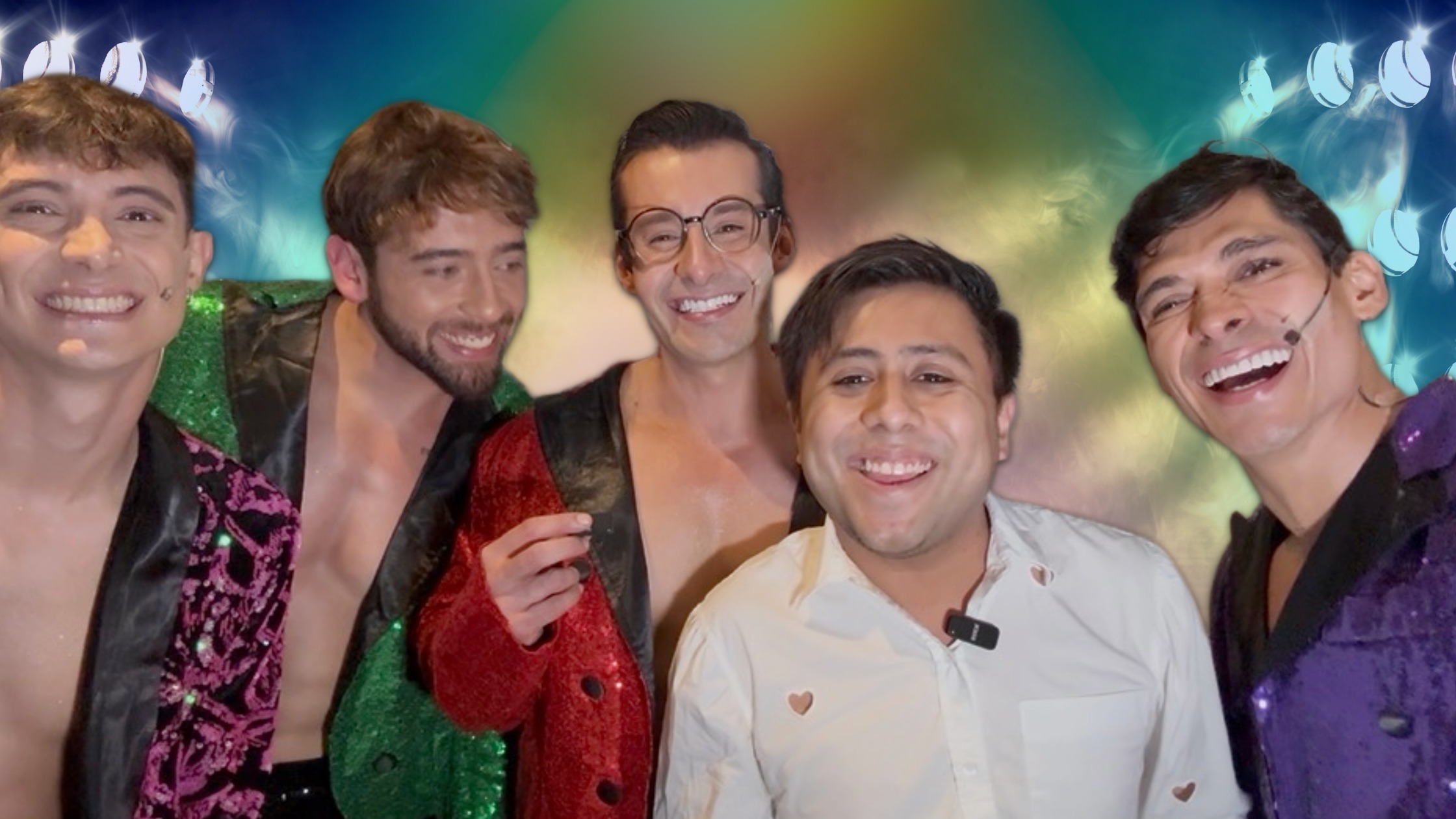
The lights go down at the Foro Shakespeare in Mexico City and everyone puts their phones away. The attention of the crowd turns to a stage built around experiences that exist entirely in the digital world.
It is press opening night of Grinder the Musical in Mexico City, and the audience is a study in contrasts. There are couples in their fifties who came for the spectacle. There are twenty-somethings who came because they saw it on TikTok. There are people who have never used the app and people who have never left it. For the next two hours, none of that will matter.
They will laugh because the joke is funny, because it is true, or because they do not quite understand it but the laughter is contagious and they are having a good time regardless. The paradox at the heart of Grinder the Musical is that the very experiences gay men have accumulated for years while scrolling, tapping, chatting, getting blocked or ghosted — and doing it all over again — are being translated into the shared experience of a live musical. The show works because it takes something isolating and makes it collective, breaking the silence around behaviors we all knew existed but had never sung about in a full theatrical production. It brings together different generations under one roof, inviting audiences to sit with the nuances of a platform that many use but few openly discuss.
When we communicate behind a screen, there is a comfort in concealment — our body language, facial expressions, and emotional reactions remain invisible to the person on the other side. Whether we are surprised, terrified, disappointed, or excited are states we have the privilege of hiding. Theater is a different story. Actors make eye contact with the audience. They recount awkward encounters and look directly at the people watching, almost seeking validation or complicity. They are asking the room to normalize behavioral patterns that so many gay men navigate in silence: How do you respond to a profile with no face, no name, no number? Is there room for love in an app where others are only looking for a hookup?
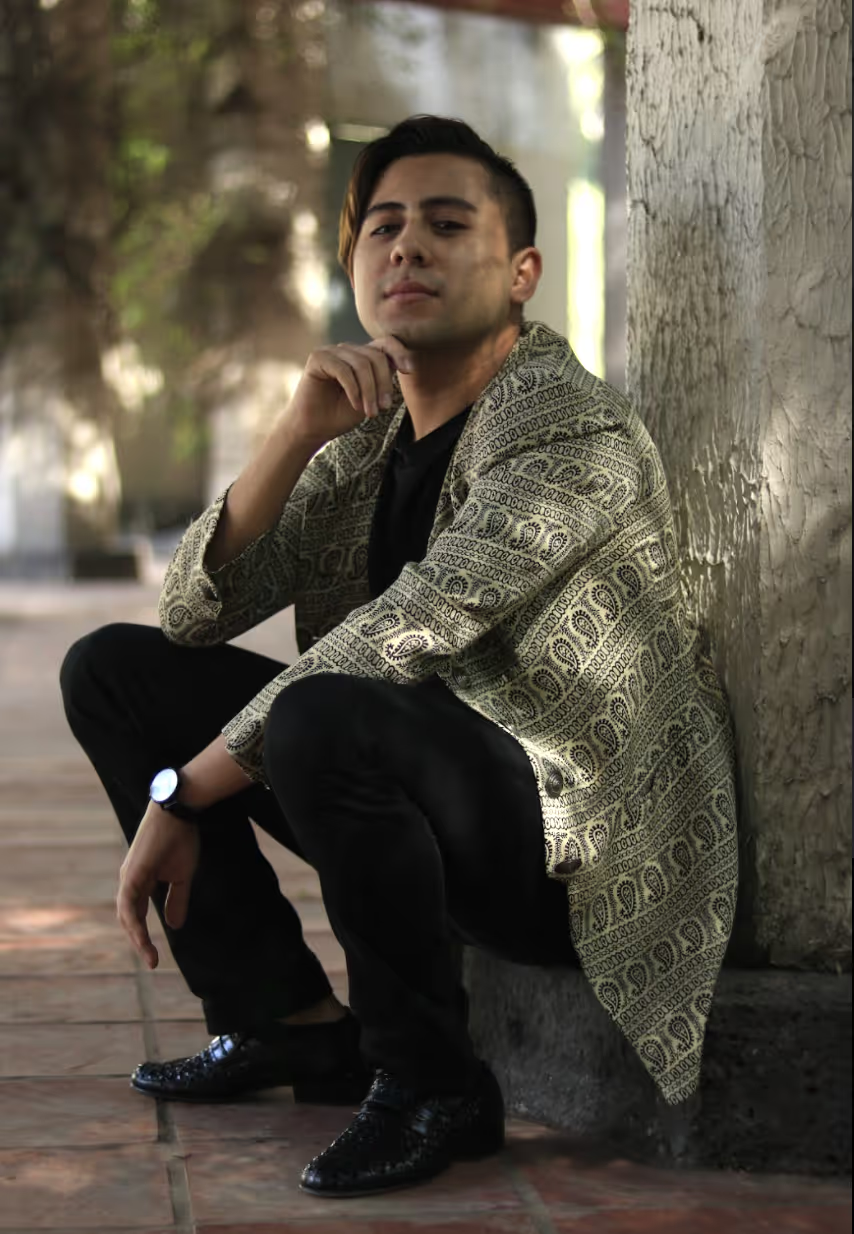
It is rare to see a new musical concept generate genuine enthusiasm across generations, but Grinder the Musical has managed exactly that. A sharp social commentary dressed as musical comedy, the show has been renewed and adapted across multiple seasons in Spain before finding its way to Mexico — and the fit feels natural. Mexico City is no stranger to either the LGBTQ+ scene or its deep theatrical tradition. The collision feels especially charged here: the capital has long been considered a progressive and relatively safe haven for LGBTQ+ expression in Latin America, and that history gives the story both permission and weight. Mexico is also among the countries with the highest number of Grindr users worldwide, with approximately 4.9 million — making this not just a cultural conversation, but a deeply local one.
This year, as Mexico City steps onto the global stage as a host city for the 2026 World Cup, the entertainment industry is rising to meet the moment with productions that are joyful, bold, and unapologetically alive. Grinder the Musical belongs to that company.
The show's central proposition is straightforward: take what gay and queer individuals experience on their phones and bring it into the world of live performance. "It's the most fun musical you will ever see. You will laugh from beginning to end," says Quique Galdeano, who plays the Discreet character. It is entertaining and insightful in equal measure, because it holds up a mirror to the digital lives of millions.
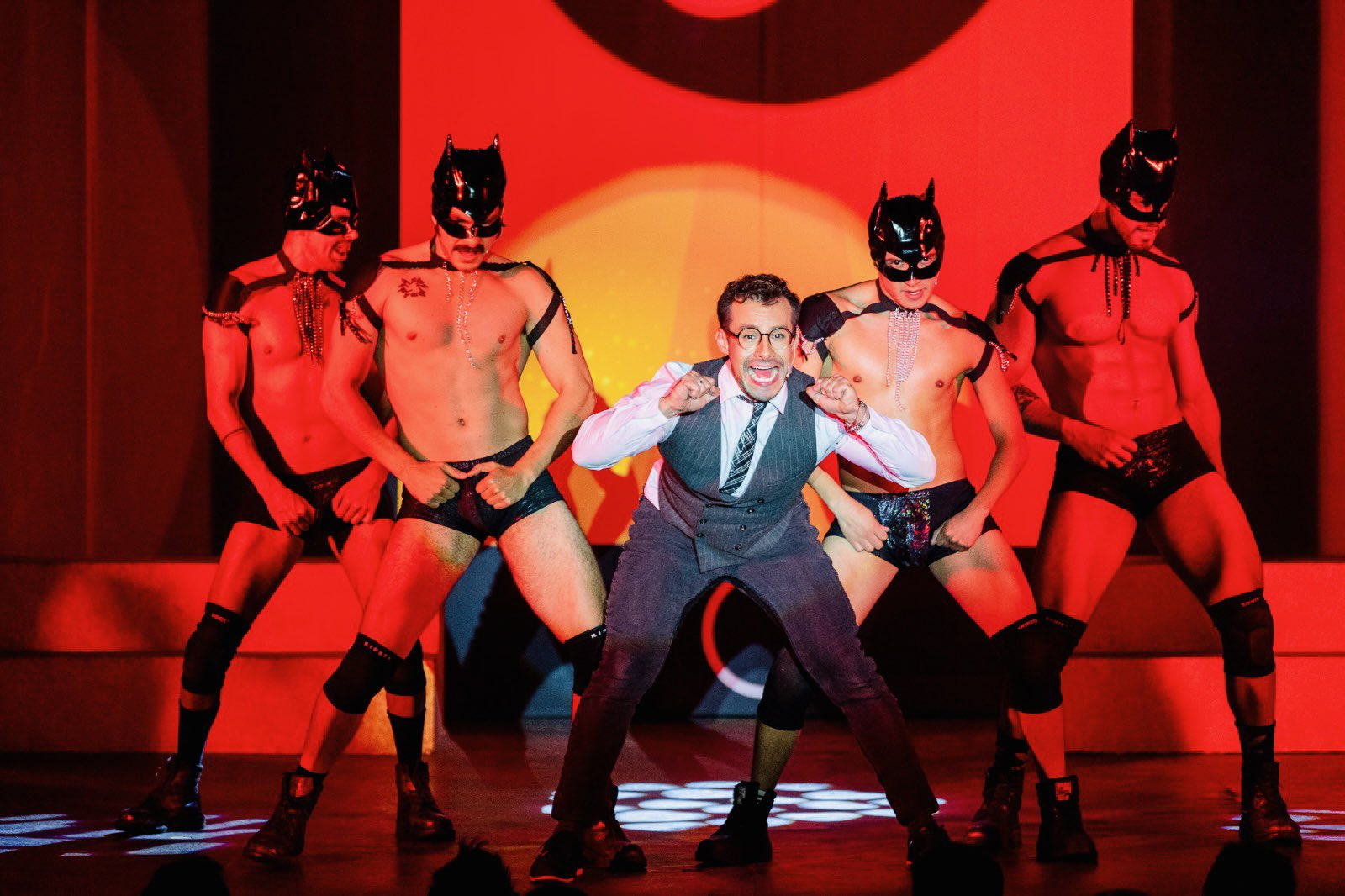
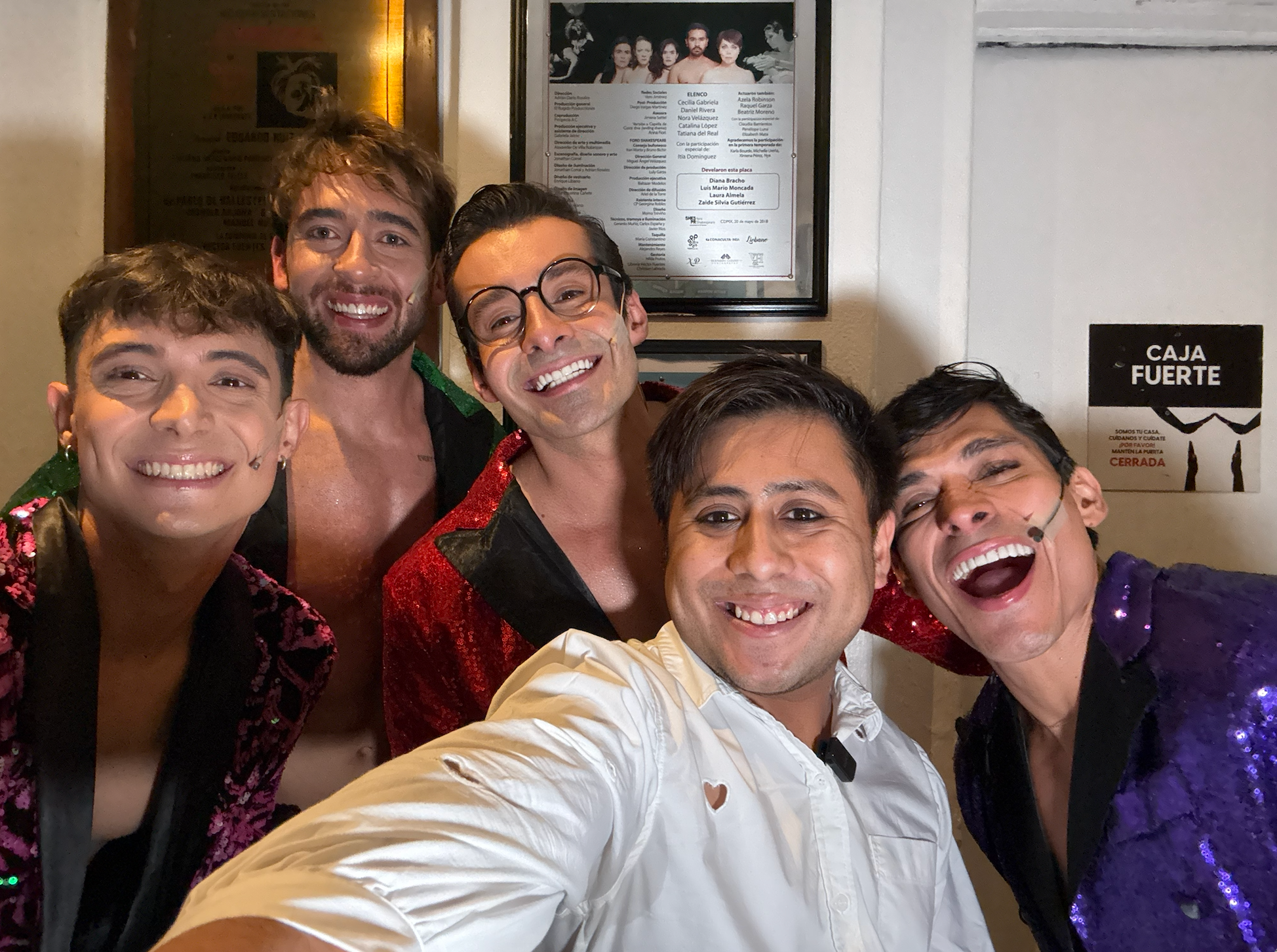
Each character opens a storyline that is, on its surface, individual — but functions as a breakthrough against years of stigma around what these archetypes represent in the app. In an exclusive interview with Political Fashion, the cast spoke about what they hope audiences take away.
The Bottom with Values navigates desire with a moral framework, caught between what he wants and who he wants to be. There is an argument to be made that he speaks most directly to an older generation that came of age under different codes of gay identity — one where self-respect and sexual freedom were often framed as opposing forces. "We always have to have values, regardless of what we are doing sexually," says Samuel Zarazúa, who plays the role, delivering the line with the kind of comic timing that makes the serious point land harder.
The Discreet Gay is perhaps the most quietly complex character in the show. The Merriam-Webster dictionary defines discreet as having "good judgment in conduct," yet within the queer community the word carries a heavier charge — discretion often signals invisibility, and invisibility can mean either safety or shame, depending on who is living it. When Political Fashion's Javier Luna asked Galdeano what discretion means for his character, the answer was almost ironically very straightforward: "The character is in the closet. Many of us have gone through that phase, but in the story you see how he begins to understand and accept himself." It is the arc the audience leans into most.
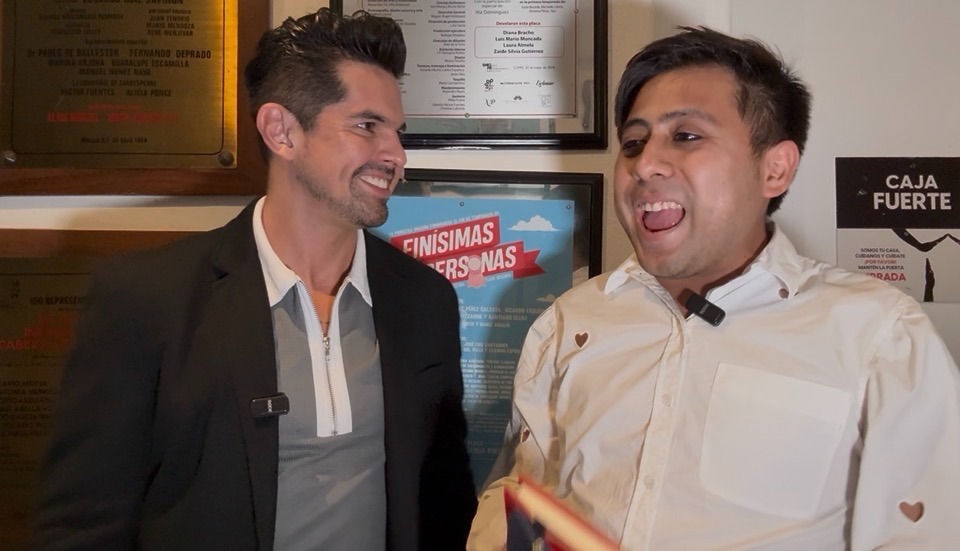
The Influencer holds a mirror up to the performance of identity in the social media era. "Everyone is an influencer these days," actor Emiliano Figueroa notes, speaking to how each person now has the tools to construct and curate a persona — amplifying virtues, concealing discomforts. The character is most legible to younger audiences and perhaps most bewildering to older ones, which is precisely what makes him useful in a show trying to bridge generations.
Looking for a Boyfriend brings attention to the idealization of relationships in a world built on immediacy: clickbait, taps, and swipes. There is an innocence to this character that sits in productive tension with everything happening around him. "I'm no longer that innocent," actor Kike Cessa confessed in the interview, "but I understand where this character is coming from, and that's enough to know where to take him."
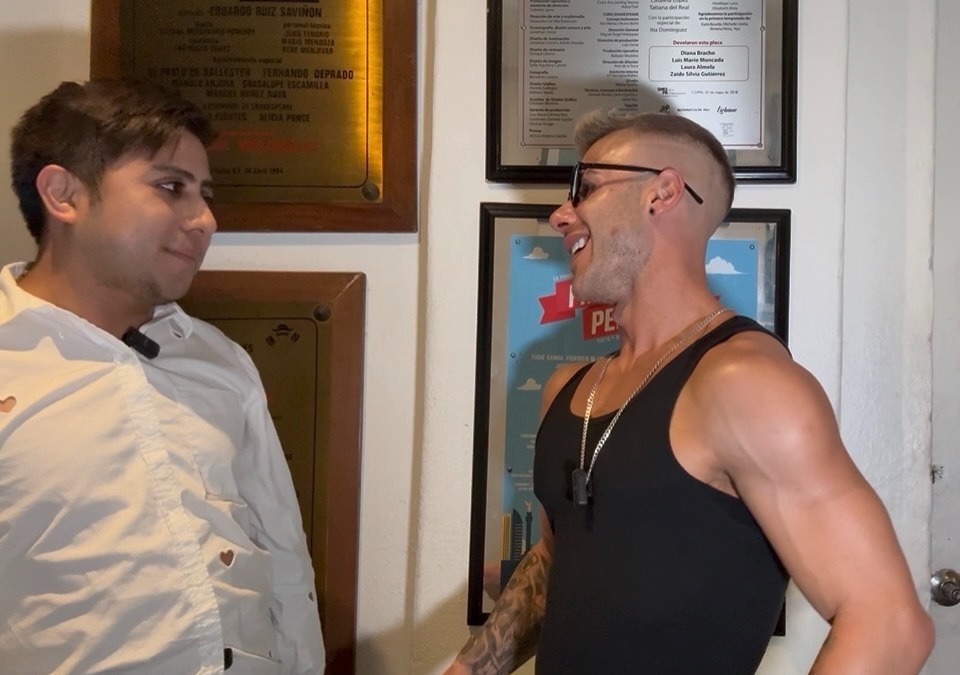
The Fit for Fit places the body at the center of the conversation — as currency, as armor, as aspiration, and as a form of exclusion. It is a dynamic that pop culture has amplified for decades and that plays out differently depending on your age and your relationship to your own reflection. "I have already passed the time in my life when I focused only on a man's body," Yair Fong admits — a line that gets a knowing laugh and says more than a paragraph could.
Binding all of them together is Grinder herself, an iconic figure in flamboyant, futuristic attire who moves between the characters and the audience, translating the awkwardness of queer culture into something the whole room can laugh at together.
The characters are intentionally archetypes. That is the point. Grinder the Musical is not trying to tell one specific story — it is trying to open a conversation in a physical space about experiences the LGBTQ+ community has been having in digital ones. It invites its audience to find connection through humor and to use theater as a safe space for recognition.
Mexican artists have long demonstrated a particular gift for using comedy to address the things that are hardest to say directly — the more uncomfortable the subject, the sharper the joke. Grinder the Musical inherits that tradition. Stories about wanting to belong, about shame within the gay community, about how to decode the intentions of a stranger behind a profile — these are easier to absorb when they are being sung, felt, and embodied on a stage rather than argued in an op-ed.
The show is relevant not only as entertainment but as a form of expression from the LGBTQ+ community, for the LGBTQ+ community. In its own way, it is telling people they are not alone in the scroll. It is a shared experience.
As the theater fills and the laughter becomes its own form of connection, the central irony of Grinder the Musical comes into focus: an app built to bring people together, yet responsible for countless experiences of isolation, has inspired a show that does what the app never quite could. It puts you in a room with strangers, takes your phone away, and reminds you that the search — for love, for validation, for someone who actually gets it — has always been more communal than a screen lets on.
.jpeg)